

Engineers make the impossible possible.
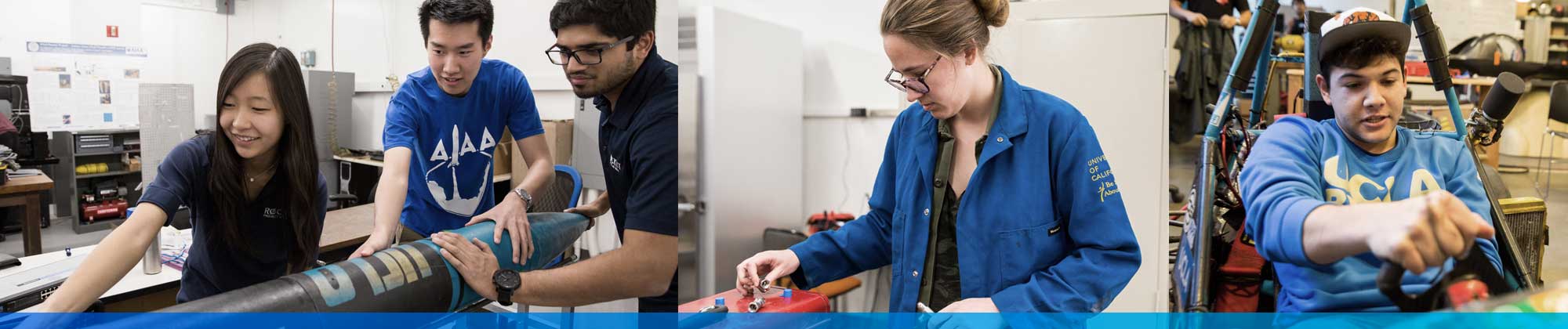
For undergraduates, UCLA Samueli will prepare you for success in meeting the ever-changing demands of the engineering profession. The curriculum emphasizes breadth as well as depth. Classes are led by faculty members who are world leaders in their field. Numerous research opportunities are available for undergraduates. And the school has a thriving group of engineering student organizations, which offer undergraduates a chance to collaborate with their peers and make lifelong friends.
While a UCLA Samueli engineering degree often leads to an engineering career, it can also be a starting point for a wide range of career paths. UCLA Samueli alumni have successful careers in medicine, law, business, the arts, government, research, academics and other fields.
Plus, in addition to your engineering education, you can also enrich your experience in the intellectually vibrant and culturally energetic community of UCLA. The campus calendar is stacked with film festivals, lectures, art exhibitions, and more. Artists from around the world perform at Royce Hall, while UCLA Athletics offers a rich tradition with home venues that include the legendary Pauley Pavilion and the historic Rose Bowl in Pasadena, and more NCAA team championships than any other school in the country.
And finally, UCLA is located in one of the world’s great cities – Los Angeles.
For an excellent, well-rounded educational experience, UCLA Samueli has it all.
Bioengineers solve problems in biology and medicine by applying principles of physical sciences and engineering while applying biological principles to create new engineering paradigms, such as biomimetic materials, DNA computing, and neural networking.
Chemical engineers work in the biochemical and petroleum industries, and in areas such as energy, nanotechnology, systems engineering, biotechnology and biomedical engineering, and advanced materials processing, as well as overseeing the chemical process in many industries.
Civil engineers plan, design, construct, and manage a range of physical systems, such as buildings, bridges, dams and tunnels, transportation systems, water and wastewater treatment systems, coastal and ocean engineering facilities, and environmental engineering projects, related to public works and private enterprises.
Computer scientists are concerned with the design, modeling, analysis, and applications of computer-related systems. They work in areas such as computer system architecture, computer networks, distributed computer systems, programming languages and software systems, information and data management, artificial intelligence, computer science theory, computational systems biology and bioinformatics, and computer vision and graphics
Electrical engineers develop circuits, devices, algorithms, and theories that can be used to sense data, analyze data, extrapolate data, communicate data, and take action in response to the data collected.
Materials engineers are concerned with the structure and properties of materials used in modern technology. They build on the foundation of materials science and work to improve the design, fabrication, and optimal selection of engineering materials, and create new materials.
Mechanical engineers apply principles of mechanics, dynamics, and energy transfer to the design, analysis, testing, and manufacture of consumer and industrial products. They create machines used in manufacturing, mechanical components of electronics, engines and power-generating equipment, vehicles and their components, artificial components for the human body, and many other products.

UCLA Samueli to Join Applied Materials’ EPIC Center to Accelerate Chip Innovation
The UCLA Samueli School of Engineering and Applied Materials Inc. announced today an agreement for the school to join as a research collaborator
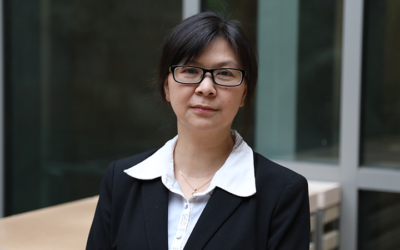
UCLA Engineering Professor Yu Huang Receives International Breakthrough Honor for Hydrogel Fuel Cell Innovation
Yu Huang, a professor of materials science and engineering and holder of the Traugott and Dorothea Frederking Endowed Chair at the UCLA Samueli School of Engineering
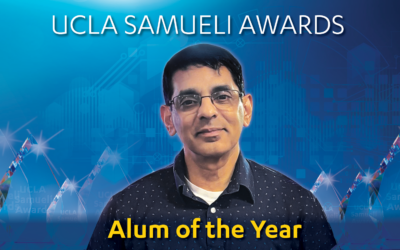
UCLA Samueli Announces 2026 Alum of the Year
Each year, the UCLA Samueli School of Engineering honors alumni, faculty, students and other engineering leaders for outstanding achievements in their fields.
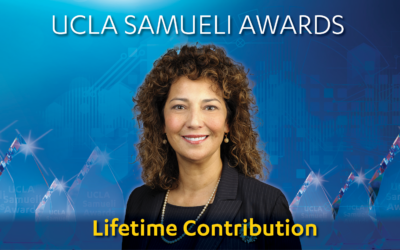
UCLA Samueli Announces 2026 Lifetime Contribution Award
Every year, the UCLA Samueli School of Engineering selects and recognizes outstanding achievements by a number of its alumni, faculty members and students who have excelled in various fields.
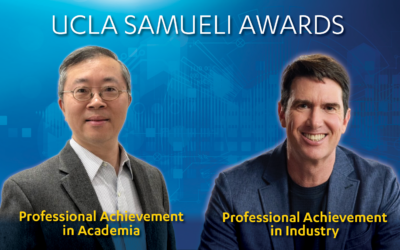
UCLA Samueli Announces 2026 Professional Achievement Awards
Each year, the UCLA Samueli School of Engineering honors alumni, faculty, students and other engineering leaders for outstanding achievements in their fields.
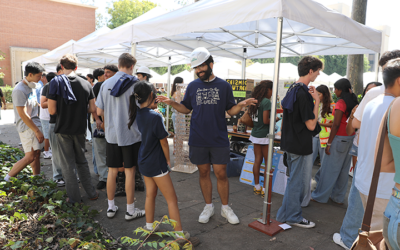
UCLA Samueli Welcomes the Next Generation of Bruin Engineers
The UCLA Henry Samueli School of Engineering and Applied Science kicked off the 2026-27 academic year with two days of welcome events this week at the Court of Sciences. Nearly 700 new master’s and doctoral students and more than 1,100 first-year and transfer students have enrolled in the school this fall.