By UCLA Newsroom Technique could allow cells to be extracted in real time, help prevent cancer from spreadingResearchers at UCLA and NantWorks have developed an artificial intelligence-powered device that detects cancer cells...

By UCLA Newsroom Technique could allow cells to be extracted in real time, help prevent cancer from spreadingResearchers at UCLA and NantWorks have developed an artificial intelligence-powered device that detects cancer cells...
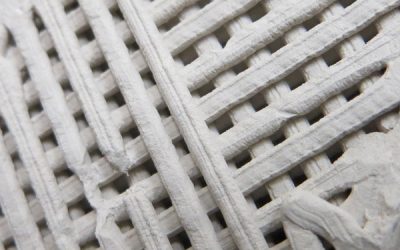
A team of UCLA engineers has received a $1.5 million grant from the National Science Foundation to develop 3D-printed concrete that incorporates carbon dioxide, a greenhouse gas, as part of a binder.
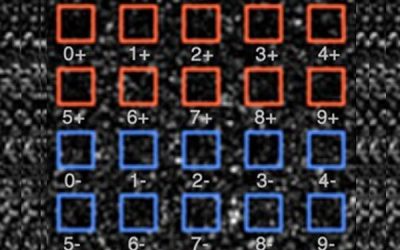
By UCLA Samueli Newsroom UCLA engineers have made major improvements on their design of an optical neural network –a device inspired by how the human brain works – that can identify objects or process information at the speed...
UCLA chemical engineers and their French and Belgian colleagues have discovered a more sustainable way to produce amines – key compounds used in a variety of industrial processes.
A UCLA team in the finals of a multi-million dollar, international prize for turning carbon emissions into commercial products, is preparing for a major showcase of its advance.
A professor of electrical and computer engineering at UCLA Samueli, has received $1.25 million in research funding from the U.S. Department of Energy to miniaturize powerful diagnostic sensor systems down to the size of a grain of sand.
Ken Nobe, a UCLA professor emeritus of engineering, world-renowned for his early studies of catalytic air pollution control of exhaust emissions and research in electrochemical processes, died on July 11, 2019. He was 93.
On the week marking the 50th anniversary of the Moon landing, the distinguished professor of mechanical and aerospace engineering reflects on his early career and influences during the Space Age.
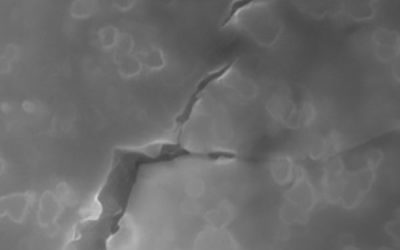
Process could be useful for applications in manufacturing and architecture
UCLA mechanical engineers and materials scientists have developed a process that uses nanoparticles to strengthen the atomic structure of glass. The result is a product that’s at least five times tougher than any glass currently available.
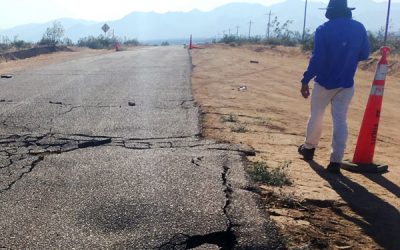
Q&A with Jonathan Stewart about what his team learned in the aftermath of the Ridgecrest quakes
A day after a magnitude 6.4 earthquake on July 4 rattled Southern California, a small team of earthquake engineers and scientists was already near its epicenter, in Ridgecrest, Calif., gathering time-sensitive data.
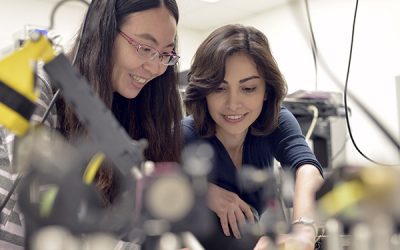
Researchers at the UCLA Samueli School of Engineering have developed an ultra-sensitive light-detecting system that could enable astronomers to view galaxies, stars and planetary systems in superb detail.
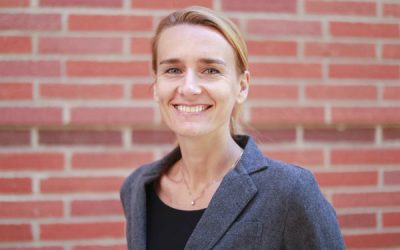
Elisa Franco, associate professor of mechanical and aerospace engineering at the UCLA Samueli School of Engineering, has received a $711,000 research grant from the U.S. Department of Energy to continue developing DNA-based synthetic molecules.